
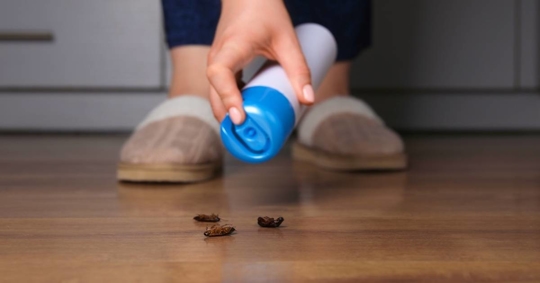
When you spot a roach scurrying across your kitchen floor or a trail of ants marching toward your pantry, your first instinct might be to grab the nearest can of bug spray. It's natural to want to solve pest problems quickly on your own. However, many common do-it-yourself pest control methods can actually backfire, spreading pests to new areas of your home or making them harder to eliminate. Understanding these mistakes can save you time, money, and frustration.
Dealing with a pest problem that won't go away? Don't let DIY mistakes make things worse. Contact Adams Exterminating today at (940) 239-9786 or schedule a visit online to get your home back on track.
Using Too Much Pesticide or Applying It Incorrectly
More isn't always better when it comes to pest control products. Many homeowners make the mistake of over-applying sprays, baits, or powders, thinking it will kill pests faster. This approach can actually be dangerous and ineffective.
When you use too much pesticide, you create health risks for your family and pets. These products contain chemicals that can irritate skin, eyes, and lungs when misused. Children and pets are especially vulnerable because they spend more time on floors where residues settle.
Over-application also changes pest behavior in unexpected ways. Bugs can detect heavy chemical concentrations and simply avoid treated areas, moving to untreated parts of your home instead. You haven't solved the problem—you've just relocated it.
Common application mistakes include:
- Spraying pesticides directly on surfaces where food is prepared
- Treating areas without reading label instructions first
- Mixing different products together
- Applying outdoor products inside your home
- Not wearing proper protective equipment
Always follow product labels exactly as written. These labels exist for your safety and to ensure the treatment actually works.
Spraying Visible Bugs Without Addressing the Source
Killing the ants you see on your counter might feel satisfying, but it rarely solves your ant problem. This is one of the most common DIY mistakes that homeowners make.
When you spray individual bugs, you're only dealing with a tiny fraction of the colony. Most pest colonies live hidden away in walls, under floors, or outside your home. The ants or roaches you see are just scouts or foragers. Hundreds or thousands more remain in their nests, continuing to breed and send out new scouts.
Spraying also disrupts how professional treatments work. Many effective ant control methods rely on worker ants carrying bait back to the colony. If you kill those workers on contact, they never complete this important job. The colony survives and your problem continues.
Instead of spraying visible pests, focus on finding where they're coming from. Look for entry points, trails, and nesting sites. This detective work helps you understand the real scope of your problem.
Buying the Wrong Products for Your Pest
Walk down the pest control aisle at any store and you'll find dozens of products. They all promise to kill bugs, but they're not interchangeable. Using the wrong product for your specific pest is like trying to fix a leaky faucet with a hammer—it's not designed for the job.
Different pests have different biology and behaviors. Cockroaches need different treatments than ants. What works for mosquitoes won't work for termites. Generic "bug spray" products might kill some insects, but they rarely address the specific needs of an infestation.
Product selection mistakes include:
- Using outdoor mosquito spray for indoor roaches
- Applying ant baits meant for sugar-loving ants when you have grease-eating species
- Treating bed bugs with products designed for flying insects
- Using repellents when you need elimination
Take time to correctly identify your pest before buying any products. Many pests look similar to untrained eyes. Those small brown bugs might be roaches, beetles, or something else entirely. Misidentification leads to wasted money and ongoing problems.
Sealing Pests Inside Your Walls
Caulking cracks and sealing gaps is usually smart pest prevention. However, timing matters. Many homeowners seal up entry points while pests are still actively infesting their homes. This traps bugs inside wall voids and other hidden spaces.
Sealed-in pests don't just die quietly. They search desperately for new ways out, often emerging through different cracks in unexpected rooms. You might seal a gap in your kitchen only to have roaches start appearing in your bathroom. The infestation spreads instead of shrinking.
Trapped pests also continue breeding in wall voids. Protected from your DIY treatments, these hidden colonies grow larger. By the time you realize the problem has gotten worse, you're facing a much bigger infestation.
The right approach involves treating active infestations first, then sealing entry points after pest activity has stopped. This combination prevents new pests from entering while eliminating existing populations.
Ignoring the Conditions That Attract Pests
Chemical treatments alone won't solve pest problems if your home continues offering food, water, and shelter. Many DIY efforts fail because homeowners focus only on killing bugs rather than removing what attracts them.
Pests come inside for specific reasons. They're seeking moisture from leaky pipes, food from crumbs and spills, or warm shelter from outdoor weather. Until you address these attractants, new pests will keep replacing the ones you eliminate.
Make your home less inviting by:
- Fixing plumbing leaks and reducing moisture
- Storing food in sealed containers
- Taking out garbage regularly
- Cleaning up spills and crumbs immediately
- Eliminating clutter where pests can hide
- Keeping vegetation trimmed away from your home's exterior
These steps aren't glamorous, but they're essential. Think of pest control as a combination of treatment and prevention. Both parts matter equally.
Giving Up Too Soon or Waiting Too Long
Pest control requires patience and persistence. Some homeowners give up after one failed attempt, assuming nothing will work. Others wait months while their problem grows, hoping it will resolve on its own.
Effective pest management takes time. Even professional home pest control programs typically require multiple visits to fully address infestations. Pests reproduce quickly, and their life cycles mean that eggs laid before treatment can hatch weeks later.
Waiting too long creates serious problems. A few ants can become thousands. A couple of roaches can become hundreds. Early intervention is always easier and less expensive than dealing with severe infestations.
If your DIY efforts aren't working within a week or two, it's time to reconsider your approach. Continuing the same ineffective methods just gives pests more time to multiply.
When to Call for Professional Help
Recognizing when DIY methods aren't enough is important. Some situations require professional knowledge and tools from the start. Large infestations, recurring problems, and pests that pose health risks all warrant professional attention.
Professional pest control isn't about spraying more chemicals. It involves identifying the exact pest species, understanding their behavior, locating nesting sites, and applying targeted treatments. Professionals also have access to products and methods that aren't available to consumers.
Consider professional help if:
- Your DIY treatments haven't worked after two weeks
- You're seeing more pests instead of fewer
- You're finding pests in multiple rooms
- You have young children or pets and worry about product safety
- You're dealing with pests like termites or bed bugs that cause serious damage
Get the Support You Need
DIY pest control works well for minor, isolated problems. But when you're facing persistent infestations or making mistakes that worsen your situation, professional guidance makes all the difference. You don't have to handle these challenges alone.
At Adams Exterminating, we help North Texas homeowners resolve pest problems effectively and safely. Our team understands the unique pest pressures in the DFW Metroplex and provides treatments designed for lasting results. We'll work with you to identify what's bringing pests into your home and create a plan that addresses both current infestations and future prevention.
Ready to take control of your pest problem? Call Adams Exterminating at (940) 239-9786 or contact us online to schedule your inspection and start protecting your home the right way.